

There is something inherently unsettling about a cuckoo clock. Its little bird emerges at the same appointed hour, announcing itself with a sound that should feel quaint and comforting. But in The Cuckoo Clock, writer-director Lisa Jay turns that familiar household object into something far more sinister. Her feature debut is an eerie, surreal horror film about love, caregiving, dementia, grief, and the terrifying uncertainty of not knowing whether you can trust your own perception.
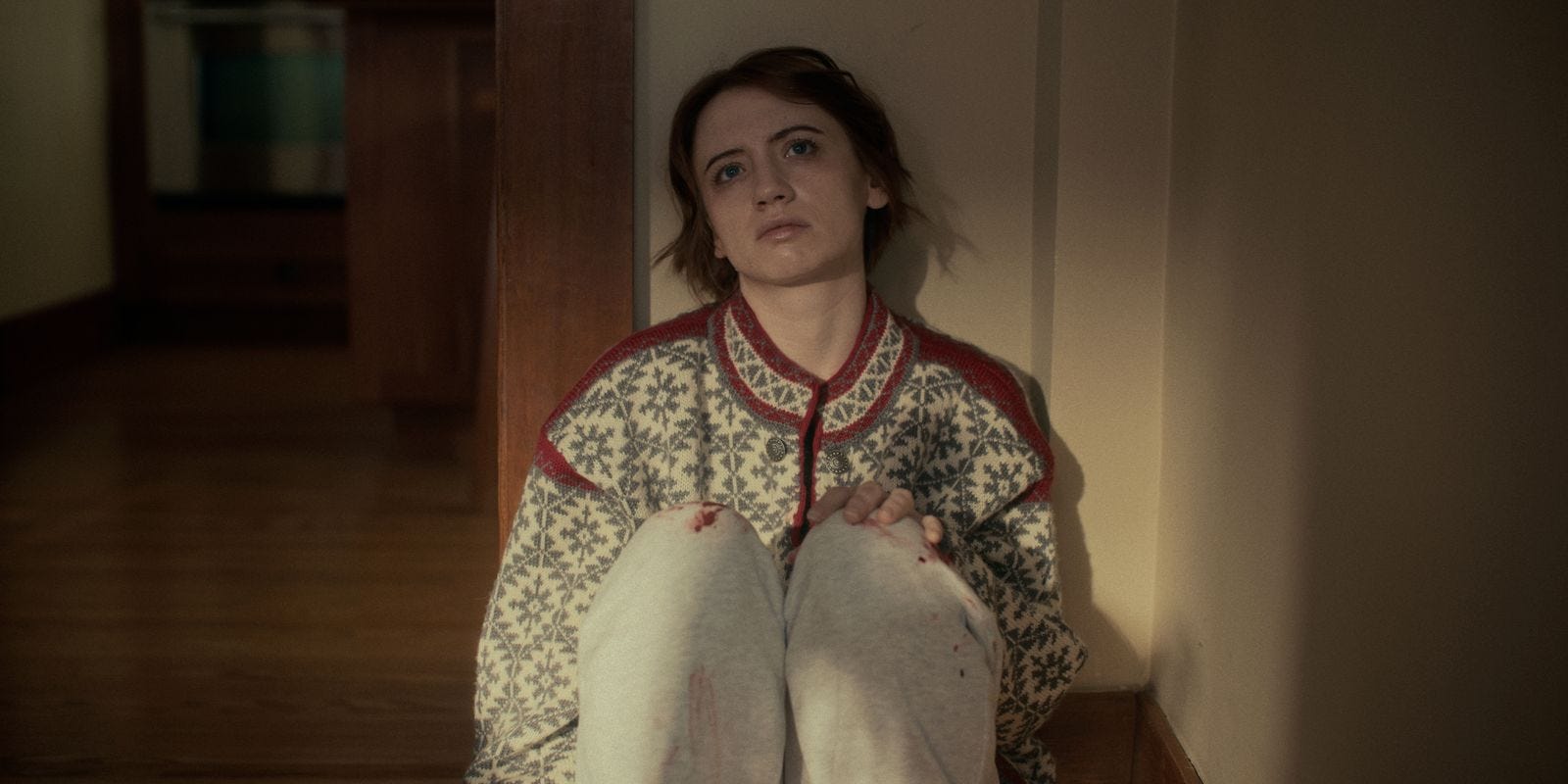
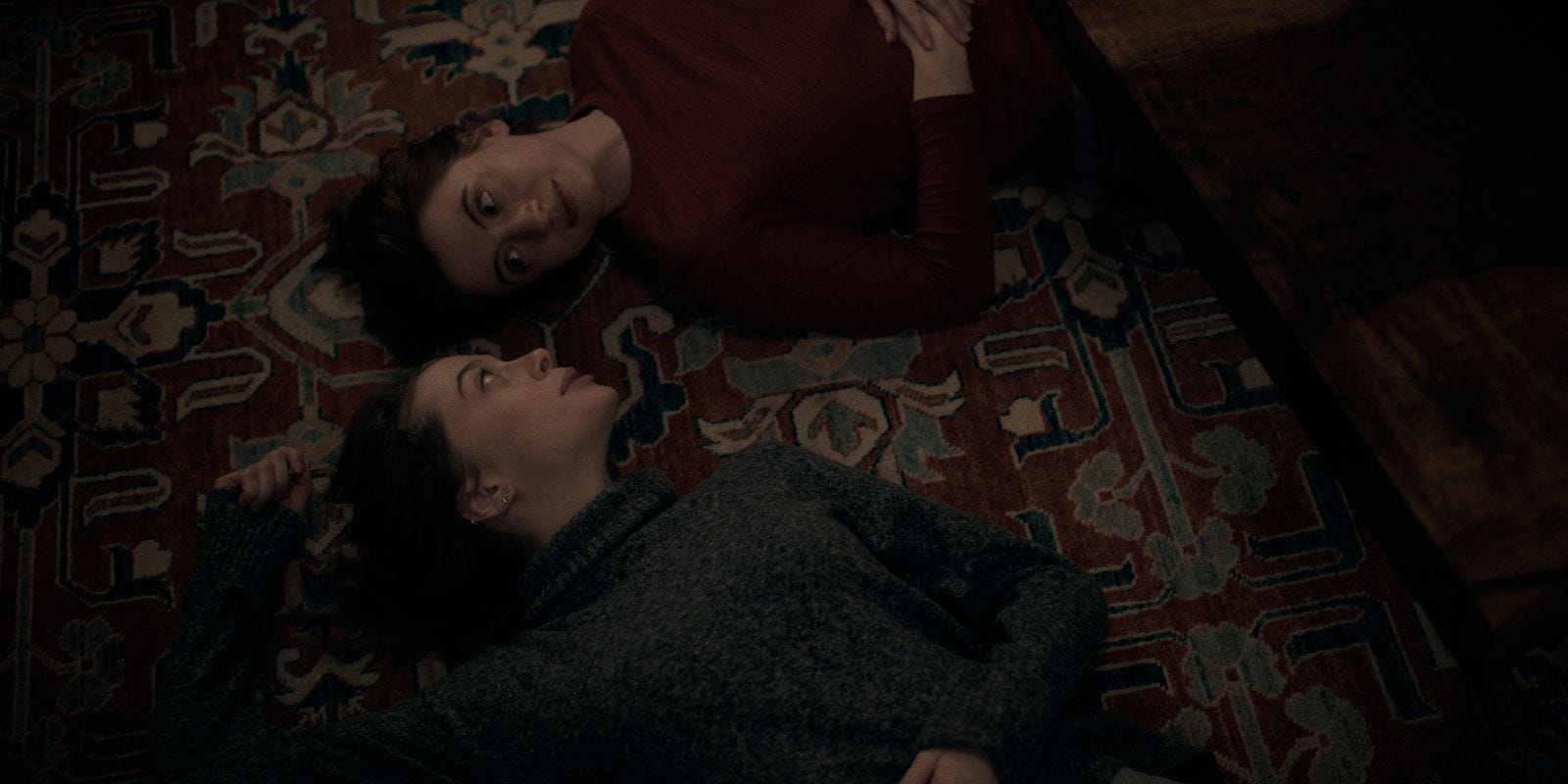
At the center of the story is Penny (Hana Hahn), a young woman who falls in love with Megan (MaKenna DeCaro), the live-in home healthcare worker caring for Penny’s grandmother, Adele (Laura Drake). Adele is recovering from surgery while struggling with dementia, leaving Penny and Megan to navigate the increasingly complicated responsibilities of caring for her. What begins as an intimate romance gradually becomes something much darker when Megan suddenly disappears.
Penny is left searching for answers, but the person—or rather, thing—she turns to for guidance is perhaps the least trustworthy source imaginable: her grandmother’s cuckoo clock.
From there, The Cuckoo Clock begins to slip further and further into dream logic. Jay isn’t interested in presenting her story as a straightforward supernatural mystery. Instead, she creates an increasingly unstable reality where memories, hallucinations, paranoia, and genuine supernatural occurrences begin to blur together. The result is a film that demands the audience pay attention—not necessarily because every detail has an immediate explanation, but because seemingly insignificant pieces of dialogue, character interactions, and visual details can take on an entirely different meaning as the story progresses.
That’s one of the film’s greatest strengths.
Jay demonstrates impressive control for a first-time feature filmmaker. The Cuckoo Clock moves with a fluidity that makes its transitions between reality and the surreal feel surprisingly natural. Rather than stopping to announce that something strange is happening, the film simply lets the strange seep into the ordinary. The more Penny searches for answers, the more uncertain everything becomes.
Thankfully, this isn’t one of those films that mistakes ambiguity for depth. While The Cuckoo Clock doesn’t explain every single element of its mystery, Jay provides enough answers to make the journey feel worthwhile. The film’s conclusion could easily have left audiences frustrated if it had simply pulled the curtain down and refused to explain itself. Instead, the core of what has happened becomes clear enough to give the story a satisfying sense of resolution while still leaving room for interpretation.
Much of the film’s success also rests on its performances.
Hana Hahn gives Penny an increasingly fascinating emotional trajectory. She begins as someone whose perspective feels relatively easy to understand, but as the story progresses, that certainty starts to deteriorate. Hahn captures Penny’s fear, desperation, affection, and paranoia without making her transformation feel artificial. You can understand why she reacts the way she does even when you’re no longer sure whether her suspicions are justified.
MaKenna DeCaro is equally effective as Megan, and the chemistry between her and Hahn gives the film’s central relationship genuine emotional weight. Their romance doesn’t simply exist to establish the premise; there is a believable connection between them, along with an undercurrent of tension and jealousy that makes their relationship feel considerably more complicated.
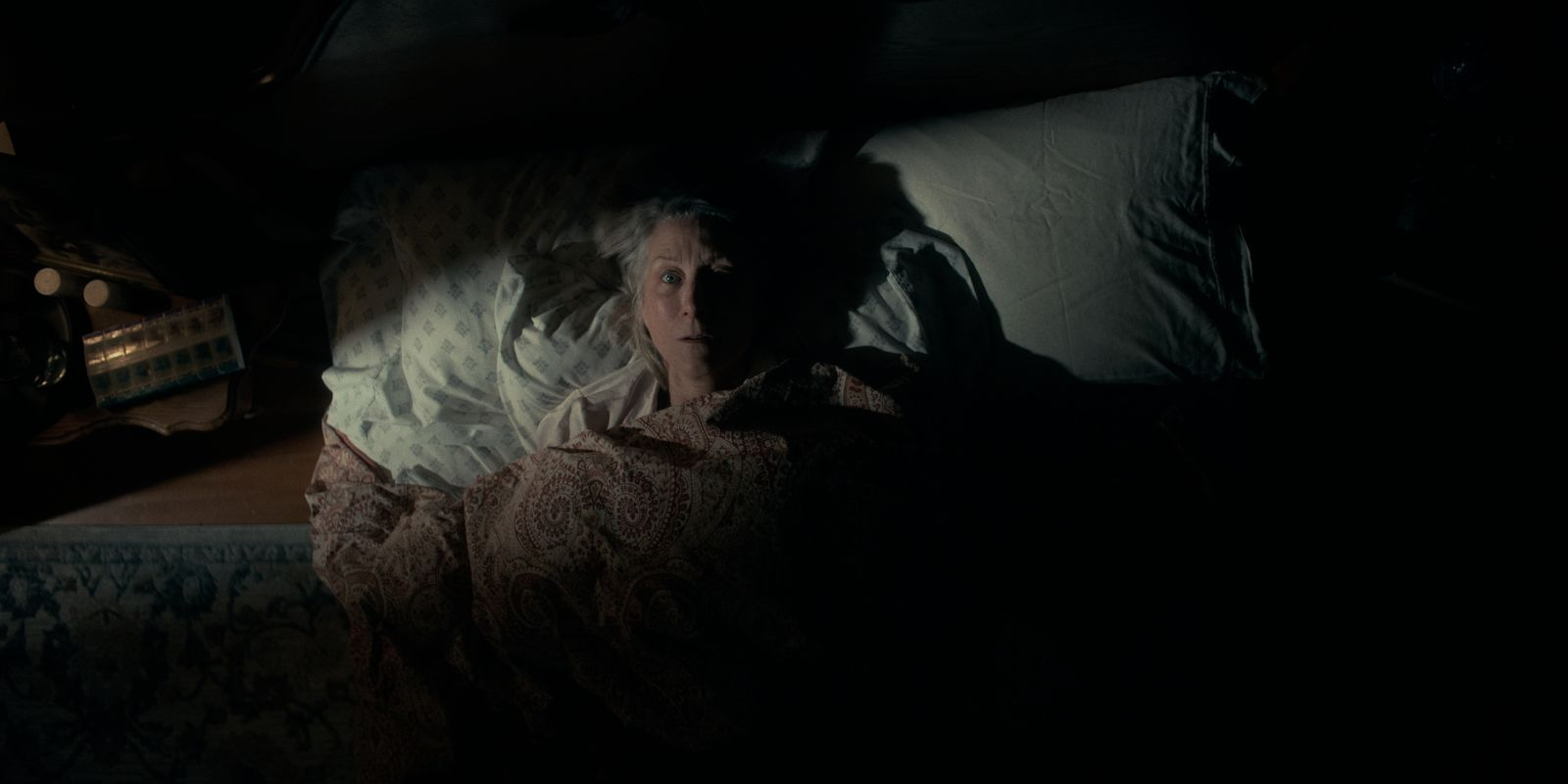
Laura Drake may have the film’s most difficult role as Adele. Her portrayal of a woman living with dementia is heartbreaking without becoming exploitative. Drake captures the confusion and frustration of Adele’s condition with an honesty that makes her presence feel deeply human. Her performance also strengthens the film’s central uncertainty: when memory itself becomes unreliable, how can anyone know which version of events to believe?
Jay’s direction occasionally allows the film’s surrealism to overwhelm its more grounded emotional elements, and some viewers may find its dreamlike storytelling deliberately disorienting. The film isn’t always interested in holding your hand, and there are moments when its symbolism feels more intriguing than fully developed. But even when The Cuckoo Clock doesn’t completely land every idea, its willingness to embrace the strange makes it considerably more memorable than a conventional horror mystery.
There are creepy moments, fantastical imagery, and some genuinely gruesome surprises, but the film’s most effective horror comes from its uncertainty. Is Penny uncovering something supernatural, or is she losing her grip on reality? Is the clock trying to help her, or is its voice leading her somewhere much darker?
Those questions linger long after the cuckoo stops calling.
The Cuckoo Clock isn’t going to work for every horror viewer, particularly those looking for a conventional narrative with straightforward answers. But for audiences willing to surrender themselves to something stranger, Lisa Jay’s feature debut offers an atmospheric and ambitious little nightmare. It is messy in places, but there’s a clear creative voice behind it—and that’s exciting.
For a first feature, The Cuckoo Clock is an impressive swing at something genuinely different. It may leave you questioning what you just watched, but thankfully, it doesn’t leave you completely lost.
Rating: 4/5